-
A car-free life
I don’t own a car. In the United States, people are often surprised that I am able to live without one. I am a minority. Especially in western cities like Tucson, the necessities of life are too spread out to make this way of living common. It takes me extra effort to do simple things…
-
Museum cabinets
Science museums are often thought of as educational institutions, dedicated to broadening the horizons of the public. But museums also serve an important role as research institutions that make collections and store them. Until I began working in museums this past year, I wasn’t able to appreciate this fact. Biological collections represent invaluable data sources…
-

A bog ecotone
Go exploring in the higher latitudes of North America and you may find yourself in a forest that look like this one below. Small hardwood trees and an understorey dominated by royal ferns (Osmunda regalis). This ancient-looking scene hides a more interesting story. Here the ground is swampy and often spotted with small pools of…
-
New publication on network dynamics
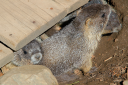
Networks are now used to describe all sorts of systems – social worlds, protein interactions, food webs, and so on. For example, here you see a litter of marmot pups, where a network could be used to describe relationships between each individual animal. These networks are useful because they allow us to identify interesting structures…
Search
Mail: 32 Giannini Hall, Berkeley, CA, 94720 USA
Visit: 305/309 Hilgard Hall