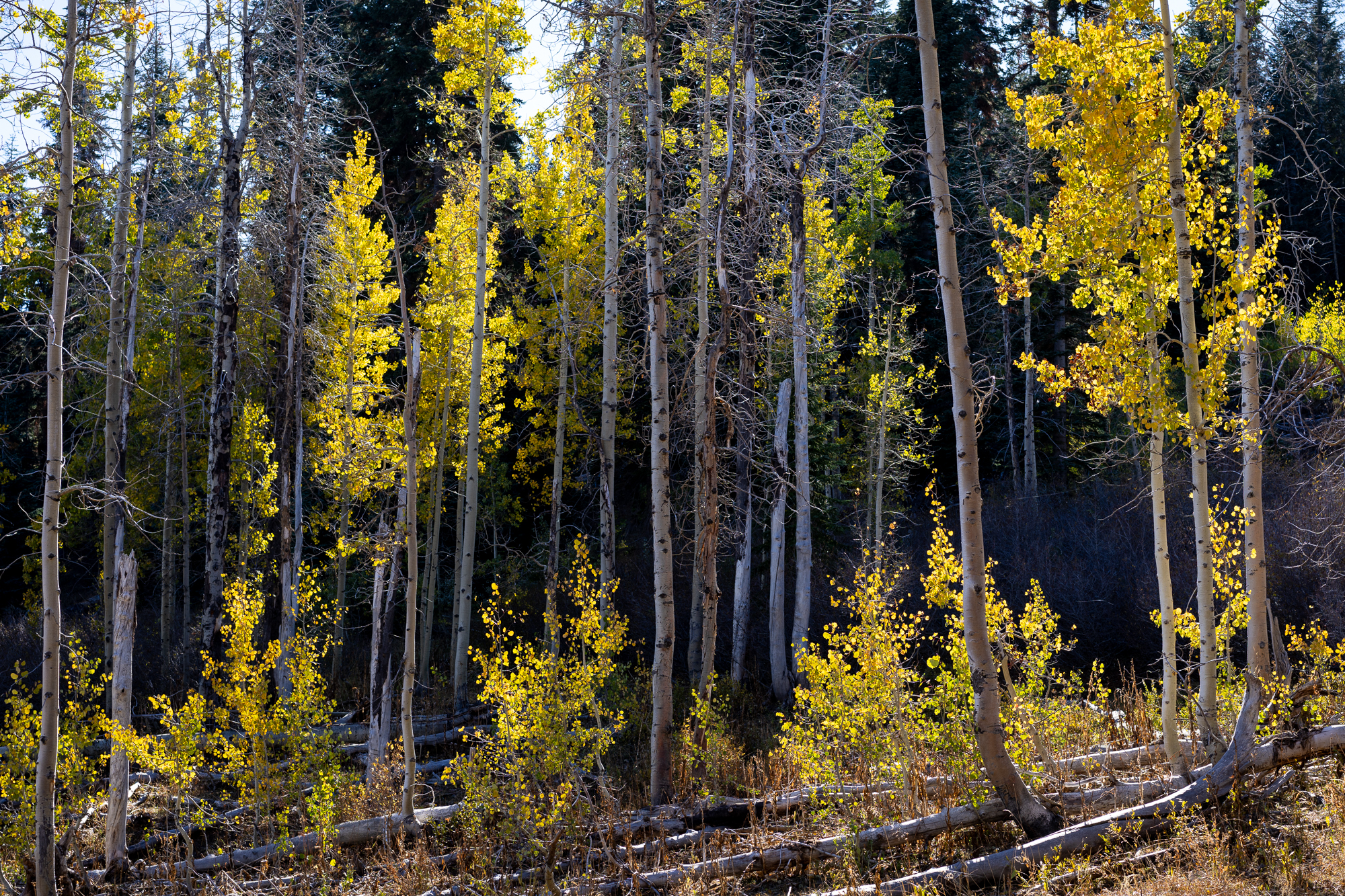
Quaking aspen is a forest species that provides services to humans such as water storage, firebreaks, and grazing benefits. Because the species is experiencing substantial population declines, it is commonly a target of restoration actions, e.g., in post-fire landscapes or in meadow/riparian rehabilitation projects. However, aspen restoration has primarily proceeded through natural reseeding or vegetative regrowth. These approaches only work in areas that still have remnant aspen populations, highlighting the need for programs focused on seedlings for restoration.
Seedling-based restoration is needed in areas in which aspen are absent/declining, or in which promoting genetic diversity is important. However, despite strong interest from stakeholders, there are no aspen seedling production programs in the country. Knowledge gaps are around (a) identifying locations where seeds can reliably be collected, (b) determining whether seeds are viable and yield genetically appropriate and reproductively compatible populations, (c) methods to accelerate seeding in juvenile individuals (to enable scaling up seed production in orchards), and (d) which organizations would be willing to buy seedlings. This project will provide a foundation for commercial seedling production.
Activities: This project will (1) conduct a state-wide survey of seed production; (2) assess the genetic and reproductive properties of parent populations and collected seed; (3) research chemical/environmental methods to stimulate early flowering/seed production in juvenile individuals; and (4) conduct market research to assess the demand for aspen seedlings.
Expected deliverables: This project will, for quaking aspen: (1) delineate productive areas for wild seed sourcing across the state, (2) prioritize individuals with favorable genetic characteristics for future seed sourcing; (3) identify methods for accelerating seed production; and (4) guide future commercial/state/federal efforts to market aspen seedlings for sale.
Beneficiaries: This project supports the 3/1/25 executive order “Immediate Expansion of American Timber Production” by providing new avenues for the BLM to restore a species that provides fire breaks and could therefore reduce timber loss of commercially valuable conifer species in wildfires. It will also develop knowledge to enable later commercial programs to propagate and sell aspen seedlings.
Project partners: Bureau of Land Management – California, Institute for Bird Populations, South Yuba River Citizens League


Volunteer to help with monitoring

We are seeking partners who are available to support this project by monitoring aspen budding, flowering, and seed production during spring 2026. If you are located in California and are able to repeatedly visit one or more aspen trees between March – May 2026 and/or assist with collecting/shipping seeds from your trees, please get in touch via this form. We are able to provide some financial compensation to volunteers and to cover any shipping costs. We are targeting sampling on BLM, USFS, and private land.

