-
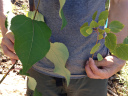
Too many chromosomes
Quaking aspen is my favorite tree. In the autumn its leaves change color to a warm yellow, making a perfect contrast against its white and black bark. At sunset the forest glows with the light filtering through the stands of this species. I never stop learning new things about it, either. On a recent hike…
-
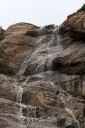
Orographic lift
Last week the remnants of Hurricane Simon passed through Tucson. The city received just an inch of rain, but the story was different up in the mountains. The summit of Mt. Lemmon, rising almost 7000′ above the city, recorded five inches of precipitation in a single day. The reason is orographic lift – mountains force…
-
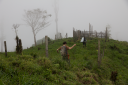
New paper on the latitudinal diversity gradient
One of best known patterns in ecology is the latitudinal gradient in biodiversity. Near the poles there tend to be fewer species than in the tropics. Here are two examples from my own travels. First, a moist lowland forest on the Pacific slope of Costa Rica (9°N latitude). In a hectare of forest you can…
-
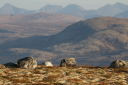
Hiding under the lichens
I spent the better part of September inside of a cloud, not moving. Recording data for a seedling census isn’t the most glamorous job, especially in the mountains when the cold wet autumn air inevitably finds its way through all the layers you might be wearing. Here is Dovrefjell, home to my friend Kristin Odden…
Search
Mail: 32 Giannini Hall, Berkeley, CA, 94720 USA
Visit: 305/309 Hilgard Hall