-
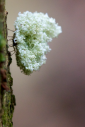
A mysterious shaggy beast
While tagging trees during a transect, we found this strange creature walking up the trunk of a tree. It was about an inch long and looked like a Tribble, with a shaggy white burden on its back. The fuzz was soft, but I wasn’t sure what it was made of. Even a brief touch dislodged…
-

Deluge
The rainy season isn’t due for a few more months, but we were drenched yesterday by a late afternoon thunderstorm. Laying in a hammock at the lab, watching lightning flashes across the lake and the far shore erased by the clouds, I realized not only by how happy I was not to be in the…
-
Too many plants
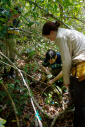
We’re nearly finished with our transects here. Over the past month we’ve installed fifty 50 meter x 2 meter transects, tagging all plants with a diameter greater than 1 centimeter. Today we finished the last one – 5,419 stems in all. Nearly all of these are small – seedlings, or small vines. Large plants require…
-
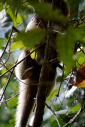
Plants, ants, and ant-eaters
Some animals challenge the human tendency to assume our superior nature. Leafcutter ants (Atta sp.) are one of these species. These ants explore the forest, choosing only the trees with the tastiest leaves. They then send thousands of workers to systematically cut small sections from each leaf. The harvested material is carried back to their…
Search
Mail: 32 Giannini Hall, Berkeley, CA, 94720 USA
Visit: 305/309 Hilgard Hall